
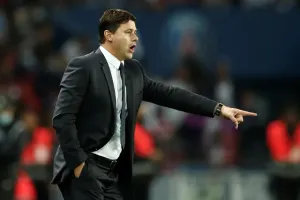
In the corridors of the Tottenham Hotspur Stadium, the ghost of Mauricio Pochettino doesn’t just haunt the halls; it defines them. To speak of the Argentine is to speak of the most transformative era in the club’s modern history—the high-octane pressing, the Champions League nights in Amsterdam, and a sense of "To Dare Is To Do" that felt tangible rather than just a motto.
We will always love Poch. That is the immutable starting point of any conversation regarding his legacy. He didn't just coach a team; he rebuilt a culture. He took a group of promising individuals and forged them into a collective that stood toe-to-toe with Europe's elite. For that, he will forever live in Spurs folklore, his name etched alongside Nicholson and Burkinshaw.
However, football is a sport that rarely rewards looking in the rearview mirror. As the club searches for its next direction, the growing clamor for Pochettino’s return feels less like a strategic plan and more like a comfort blanket. If Tottenham are to progress, they must acknowledge a painful reality: the Pochettino of 2026 is not the Pochettino of 2014, and the Premier League he would return to is a vastly different beast.
1. The Tactical Meta Has Moved On
When Daniel Levy appointed Pochettino from Southampton in 2014, Spurs were effectively "disruptors." At that time, Pochettino was at the bleeding edge of the coaching meta. His 4-2-3-1 system, built on extreme physical conditioning and a relentless high press, caught the Premier League off-guard.
In that era, many top-flight teams were still transitioning away from rigid 4-4-2s or slower possession models. Pochettino’s "Bielsa-lite" intensity allowed Spurs to outrun and outfight teams before they had time to settle.
Fast forward a decade, and that "intensity" is no longer a USP; it is the entry fee for the Premier League. From Pep Guardiola’s refined positional play to Unai Emery’s mid-block traps and Andoni Iraola’s verticality, the tactical landscape has become hyper-sophisticated.
Pochettino’s recent tenures at Paris Saint-Germain and Chelsea suggest a coach whose tactical evolution has plateaued. At Chelsea, despite a wealth of talent, the team often lacked a clear structural identity in possession, relying more on individual brilliance than the automated patterns of play seen at Arsenal or Liverpool. Returning to a league where even bottom-half teams like Brighton or Brentford possess elite tactical organization, Pochettino’s reliance on "energy and spirit" may no longer be enough to bridge the gap.
2. A Fragmented Club Structure
The second, and perhaps more terminal, argument against an appointment is the fundamental shift in how Tottenham Hotspur is governed. Pochettino thrives when he is the "spiritual leader" of a project—a role that requires significant control over the environment.
By the end of his first stint, that control was already slipping. In the summer of 2019, a visibly frustrated Pochettino suggested his title should be changed to reflect his lack of influence over transfers. He famously told reporters:
"I am not in charge and I know nothing about the strategy of the club... Maybe the club should change my title description now because my job now is to coach the team. It is not a question for me, it is a question for the club, and maybe I am going to move out or maybe I am going to change my title." — Pochettino on his role in 2019
If Pochettino felt restricted then, the current iteration of Spurs would likely feel like a straitjacket. The club has since moved to a "continental" model with two Sporting Directors (Johan Lange and whoever replaces Fabio Paratici), a CEO in Vinai Venkatesham, and a relatively novice group of owners navigating the post-Levy era.
There are now "too many cooks in the kitchen" for a manager who prefers a direct, emotional line to the chairman. Pochettino’s style of management is holistic; he wants to touch every part of the training ground. In a modern structure where the "Head Coach" is merely one piece of a recruitment-led machine, the friction would be instantaneous and likely detrimental to the squad’s harmony.
The Sentimentality Trap
Beyond tactics and structure, there is the risk of "tainting the memory." We have seen this script before in football—the returning hero who fails to capture the lightning in the bottle a second time.
The squad Pochettino would inherit is no longer the young, impressionable group that hung on his every word in 2015. This is an older, more cynical group of players who have been through the ringer of Mourinho, Conte, and Postecoglou. The "Magic" of the Pochettino era was rooted in a specific time and place. To try and recreate it now isn't just a risk; it's a misunderstanding of why it worked in the first place.
Spurs need a coach for 2026 and beyond—someone who can navigate the complexities of modern data-driven recruitment and implement a tactical system that can break down the low blocks of the modern era. Mauricio Pochettino will always be a legend at N17, but for the sake of his legacy and the club’s future, some doors are better left closed.