10 years ago, West Ham were embarking on their final season at the famous Boleyn Ground, where a team centred around Dimitri Payet's magic finished seventh and secured European football.
A decade on from a stadium move promised by the owners to take the team to the Champions League, the club instead are hurtling towards the second tier of English football with a whimper, in a half-empty stadium that they do not own.
As Morgan Gibbs-White stood performing his trademark celebration in front of the Bobby Moore Stand, the realisation hit that West Ham will most likely be playing Championship football next season.
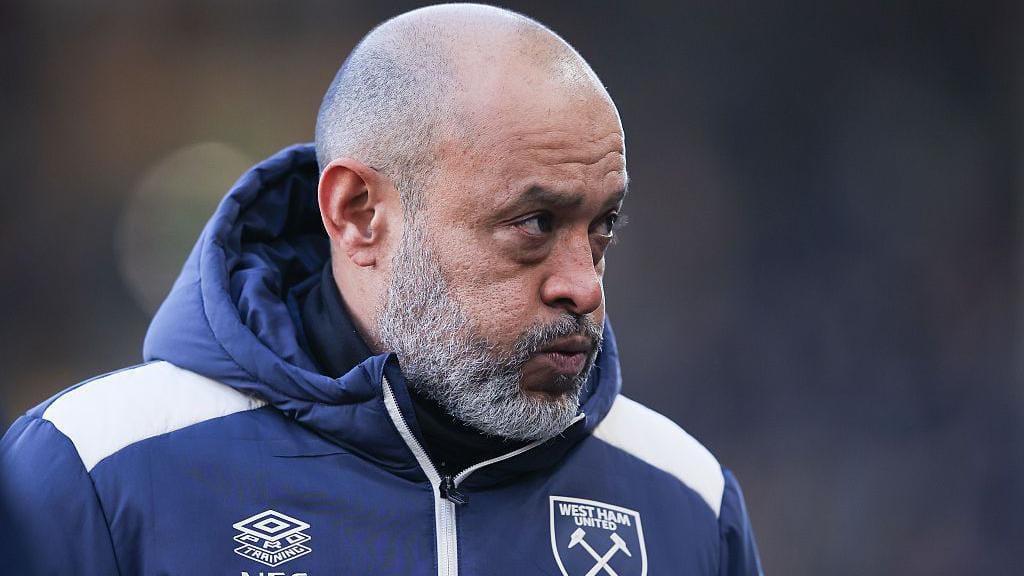
Over two years on from that famous night in Prague, a culmination of bad decisions and terrible recruitment has left Nuno and his team in a precarious position. While questionable line-ups and in-game management have not helped the Portuguese boss's cause, the problems lie beyond any manager that has gone through the revolving door at the London Stadium in recent years.
West Ham have survived from this position before. 2006/2007 saw 'The Great Escape', aided by a certain Argentinian superstar in the name of Carlos Tevez. The Hammers were 10 points from safety with just nine games to play. Bobby Zamora up front and a young Mark Noble in midfield, the squad rallied to win seven of their final 10 matches to ensure their top-flight status against all odds. The heartbreaking 4-3 defeat at home to Tottenham, a game the hosts led 3-2 heading into the 90th minute, sparked the change of fortune needed. Getting stuck into challenges, Tevez jumping into the crowd when he scored a trademark free-kick. The side was applauded off in a hostile Upton Park, Mark Noble in tears. The Hammers fans saw the passion and subsequently responded by backing them for the remainder of the season.
Among the likes of James Collins and Anton Ferdinand, that squad had leaders. Determined players who were able to use the Spurs' loss as motivation. In comparison, the current team has nothing like that. No stand-out superstar, no collective togetherness. Barely even a tackle going in.
And most significantly, it's not Upton Park anymore.
The decision to leave the Boleyn was met with discontent, although a tiny degree of optimism, as David Sullivan and Karren Brady promised a 'world-class team in a world-class stadium'. Neither has been evident.
The final season at Upton Park brought European football, and a team that should have been built around Dimitri Payet going forward. The Frenchman left, citing homesickness, although sharing an attacking line with Jonathan Calleri and Simone Zaza would have done little to convince the playmaker this was a club with serious intentions.
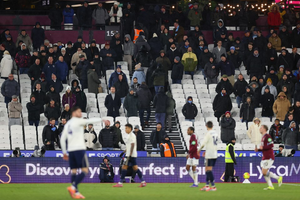
Upon Nuno's appointment, he described the need to make the London Stadium 'hell' for other teams. It's become hell for their own faithful. A half-empty stadium ahead of a crunch game showed the lack of belief from the fans, and quite rightly, the discontent. Even the popcorn tourists failed to make an effort on a bitterly cold night in East London.
David Moyes galvanised the team during COVID and the seasons that followed. He brought together a likeable squad with characters. Declan Rice, Pablo Fornals, Lukasz Fabianski, and even Jesse Lingard in his short loan spell, to name a few. It all climaxed with a European trophy and an East London parade.
The narrative that Moyes was hounded out is a lazy one, often cited by mainstream journalists. The club should have built on the success. Moyes's following season with us had the makings of a farewell campaign. People forget the team conceded 74 goals, the most against the club in the Premier League era, as well as the 6-0 home loss to Arsenal. They also conceded five goals at Liverpool, Chelsea, Fulham and Crystal Palace. A public breakdown in the relationship with the director of football Tim Steidten, too. Change was needed, a shift towards a different style of play.
The appointment of Julen Lopetegui felt like a complete side-step. A defensive-minded coach with a similar playing style. It was the opportunity for the board to look towards a younger manager, someone who may be able to fill the void and get the fans off their feet and continue the momentum. But Julen, now manager of Qatar's national team, was out of work since his departure from Wolves. A cheaper option, which is exactly why he was subsequently appointed.
Graham Potter stripped the club of leaders. Fan favourite Vladimir Coufal has spoken about the disrespectful way he was released from the club. Admittedly, a few departures were forced. Michail Antonio had his car crash, Kurt Zouma was injury-prone, and Aaron Cresswell reached the end of his contract. Mexican national captain Edson Alvarez, a key player in a midfield position already lacking depth, was loaned out to Fenerbahce. Departures of some of the few players that the fans could identify with on the pitch began the early signs of disconnection.
The players now feel like strangers. No interaction, no passion. Gone are the days of speaking to the players through the railings of the car park at Upton Park, clapping them as they arrive, and seeing them drive off in their luxury cars. The squad arrive now under the shadow of the London Stadium, shielded away from paying fans.
Almost incomprehensible how West Ham are in this position with the platform for growth they had after winning a European trophy and banking £105m for Rice less than 3 years ago
— Adam Summerton (@adamsummerton) January 6, 2026
Not only that, they’ve had PL’s 2nd highest avg attendance for a few years too. So many bad decisions
A long walk to the bowl, situated in the middle of the Olympic Park, takes you past tall office blocks and an art gallery, with little feeling of a football game imminent. It's not Green Street, with market stalls, an atmosphere in the air, the old stadium suddenly appearing nestled between rows of houses.
The 2011/12 season in the Championship was enjoyable. Some new stadiums to visit, different teams and some good memories. Taking 7000 fans to Coventry was a highlight, rewarded with Freddie Piquionne scoring the winner after falling flat on the floor. The Ricardo Vaz Te goal, high into the Wembley net at the Play off final, will also live long in the memories of fans who witnessed that day in the sun under Sam Allardyce. The thought of no VAR, given recent controversies, also makes the football feel purer and goal celebrations more natural.
It wasn't too bad in the second tier.
But again, that was at Upton Park.
At a rented 66,000-seater stadium, it will feel even more soulless.
Whoever is in charge will have a rebuilding task of large proportions awaiting. Inadequate training facilities, an array of expected departures including the likes of Jarrod Bowen, amongst others, plus a fanbase largely disengaged with the club. An instant return is anything but guaranteed.
Managers and players can come and go, as they have in their numbers during recent times. The core problems come solely from above. A non-existent recruitment structure that seems to mirror picking players randomly out of a hat. With increased losses expected that come with relegation, at a stadium that already generates a loss with each match it hosts, it's difficult to predict any kind of positive financial status over the next few years.
As protests threaten to ramp up further, the future is very much unclear under the current Sullivan/Brady ownership, a pair who have already ripped the heart out of a much-loved East London club. The divide and lack of trust between the boardroom and the supporters is past the point of repair, wider than the gap between the lower and upper tiers behind each goal.
To be on the brink of relegation two years after winning a European trophy and rece £105m for Declan Rice, takes appalling leadership. selling up is the only outcome, with much work ahead to fix a fragmented club.