
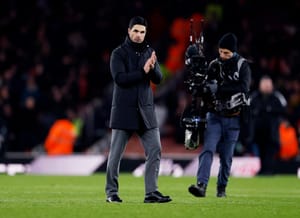
Arsenal’s season to this point has been largely positive. We’re competitive on all fronts, still in the title conversation, and looking far more comfortable in Europe than we did not so long ago. That said, it hasn’t all been smooth sailing, and if we’re being honest, some clear shortcomings continue to surface.
1. Turning Control into Comfort
One of the recurring frustrations has been the inability to turn dominance into daylight on the scoreboard. Arsenal often controls territory, possession, and tempo, yet games remain unnecessarily tight. Missed chances, hesitation in the box, and poor final decisions have meant we’ve left the door open in matches that should have been settled far earlier.
This has fed into the anxiety of late games — not because we’re constantly under siege, but because the margins remain thin.
2. The Centre-Forward Question
The striker situation remains unresolved. There’s been effort, movement, and link-up at times, but not enough consistent goal threat. When chances fall to our centre-forward, too often the reaction is half a second late or the movement doesn’t quite match the delivery. The game against Nottingham Forest was a clear example of this point.
Arsenal don’t need a 30-goal striker to function — but they do need clarity, rhythm, and reliability in that position. Right now, it feels like a work in progress.
3. Second-Half Drop-Offs
For all the control we show in the first halves, there have been too many occasions where our level dips after the break. Whether it’s fatigue, tactical tweaks from the opposition, or our own imprecision, we’ve sometimes struggled to regain momentum once it swings away from us. For instance, in the game against Liverpool and Man United, we ought to be putting more pressure on the opposition's goal line, rather than sitting back and inviting the pressure that eventually broke our hearts in the game against Man United, especially.
The best teams find ways to wrestle games back. Arsenal haven’t always done that quickly enough.
4. Squad Depth Under Stress
Injuries have exposed how thin things can look in certain areas, particularly in defence. When key players are unavailable, the margin for error shrinks dramatically. The solutions exist, but they often involve reshuffling multiple positions, which disrupts fluency.
It’s not a crisis — but it is a reminder that the squad is still being built, not finished.
5. Game Management vs Game Control
There’s a fine line between controlling a match and simply surviving it. At times, Arsenal have slipped into the latter unnecessarily, inviting pressure rather than asserting authority. The intention is usually right, but execution hasn’t always followed.
That’s often the difference between champions-in-waiting and champions.
The Bigger Picture
The second half of the season will be defined by refinement: sharper finishing, better second-half management, greater composure under pressure, and continued trust in the depth that has already carried the team through difficult moments.
The foundation is solid. The direction is right. The challenge now is to iron out the creases and turn good performances into great ones.
Current Evolution (2025/26): Calculated Risk & Verticality
By mid-2025/26, Arteta has refined the system into a more dynamic, unpredictable version while preserving core strengths:
- Midfield dynamism — Rice pushes higher more often (increased final-third passes, box arrivals), turning double pivot into fluid 3-2-5/3-1-6 shapes in possession.
- More verticality — Less sideways passing; quicker forward passes, especially after regains; "arriving" runs in the box (flooding channels) to break low blocks.
- Subtle pressing tweaks — More aggressive in transitions, coordinated traps, but still elite counter-pressing.
- Flexible attacking roles — Players like Eberechi Eze (as No.10 between lines), Gyökeres (hold-up + runs), and wide threats (Saka/Martinelli) add unpredictability.
- Defensive resilience — Maintained elite structure (low xGA, high clean sheets) despite injuries; "functional" defenders (Timber/Calafiori) rotate fluidly.
Arteta has described this as "evolving while maintaining great things" — calculated risk over rigid control. The result: top of the league, dominant in Europe, and a side that looks more complete and adaptable than ever.
The evolution isn't revolutionary — it's incremental, intelligent, and player-led. From survival mode to genuine title contenders, Arteta has built Arsenal into a tactically mature force. The question now: can this version finally convert dominance into silverware?
COYG ❤️⚪