
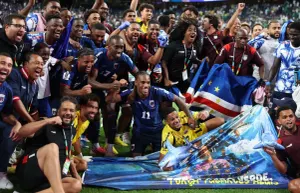
FIFA's first venture into a 48-team World Cup group stage has come and gone. Despite the stories created by some underdogs, it left us with a format that largely killed off some form of jeopardy. As Gianni Infantino hints at a 64-team tournament for 2030, would this actually be a workable solution?
Following expansion ahead of the 1998 World Cup, the simple modern-day 32-team format as we have come to know it, has given us some historic moments through the years, with no room for any slip-ups in the first stage.
The likes of Portugal (2014) and Germany (2022) both suffered dramatic eliminations in the group stages with four points, tallies that would have comfortably seen them advance in third spot in the 48-team tournament.
As the knockout rounds commenced throughout the US, Mexico, and Canada, 72 games across the groups culminated in 16 teams being eliminated, just one-third of the field. The 'best third-place' scenario has been in effect at the European Championships in recent years, with teams waiting patiently to see if they have done enough to advance.
Predictable results
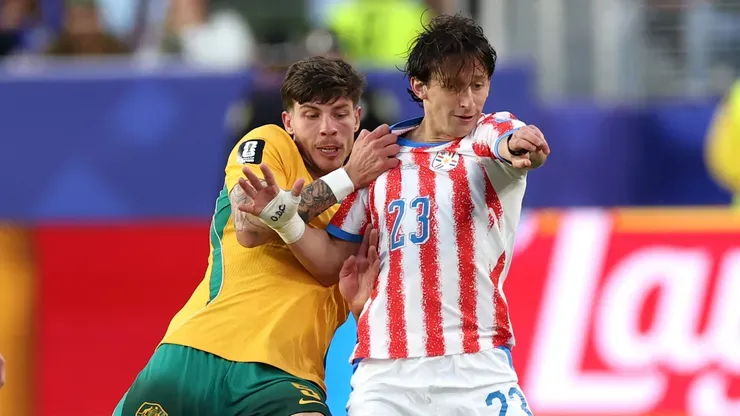
On a larger scale, the 2026 World Cup has highlighted flaws in the format, including giving a big advantage to teams in the latter end of the 12 groups. Paraguay and Australia showcased this with a dour 0-0 draw in San Francisco in their Group D finale, a result that ensured both teams advanced to the next stage, something they were aware of prior.
Algeria and Austria also played out a thrilling 3-3 draw in Kansas City, which on paper, looked like one of the games of the tournament. The reality, however, was a narrative solely pushed by the prospect of facing an easier opponent in the next round. Not only did a point ensure both teams progress, but the winner would face Spain next, while the side who finished 3rd faced the arguably less difficult match-up against Switzerland. Algeria fans celebrated Austria's 94th-minute equaliser against them as if the North Africans themselves had scored a late winner.
Lack of motivation
After hundreds of qualifiers across the world, spanning over three years before the North American showpiece got underway, the World Cup has always been about quality. The best nations, the best players on show, the final eclipse after a long season. When nations do not head onto the pitch with full motivation to win, you have to question the format.
FIFA will discuss expanding the World Cup to 64 teams after the tournament. This simulation uses the official 2026 World Cup draw, with only newly added teams and seeding adjustments, while preserving the continental distribution to ensure a realistic outcome.@revistaseriez pic.twitter.com/schTguK8P6
— @Abdul_Oranje (@dutch4ever1) July 13, 2026
The switch to head-to-head as a tiebreaker, from the traditional goal difference, also abolished some further battles, with teams advancing or being eliminated after match day two.
The expansion itself has been a relative success. The story of Cape Verde springs to mind, and how the third-smallest nation to ever play at a World Cup captured the hearts of so many people, going toe-to-toe with the might of Messi and his Argentina side. Having 10 teams in the tournament that had not played at any World Cup this century was a refreshing change from the usual entrants we have come to see.
One sided affairs
Many concerns centred around the large gulf in class between some of the top and lower seeds, and the prospect of several one-sided matches throughout the tournament. This has been evident, with nine matches in Qatar 2022 finishing by a winning margin of 3+goals, compared to 19 games already in 2026, heading into the semi-finals.
🚨 𝗡𝗘𝗪: FIFA will examine the possibility of expanding the 2030 World Cup to 64 teams after the success of the 48-team format.
— The Touchline | 𝐓 (@TouchlineX) July 13, 2026
· FIFA president Gianni Infantino said the proposal will be reviewed by the organization's committees once the 2026 World Cup concludes. He argued… pic.twitter.com/W7ciyiqBc0
Although another expansion would mean that over 30% of FIFA's 211 members would clinch the most sought-after of tournament tickets, the quality would not be diminished much further. 14 of the top 50 in the world rankings failed to qualify for the 2026 edition, including Denmark, Cameroon and Nigeria, as well as fallen European giants Italy.
With the possibility of going back to a 32-team tournament not an option under Gianni Infantino's money mercenaries, either reformatting the current structure or expanding to 64 teams are the only viable ideas.