

As a third-generation Tottenham fan, and a season ticket holder for more than 40 years, I've been privileged to see some of the greatest footballers that have ever played the game. This includes Messi, Ronaldo, and even Diego Maradona, as I was there that amazing night at Ossie Ardiles' testimonial. These were one-offs (both as players, and my opportunities to see them live), but the football memories that I cherish most are of the amazing players that became my heroes, and the magic that they regularly displayed on a Saturday (or more recently Sunday) afternoon.
As a young child I grew up on Hoddle, Roberts, Ardiles and Villa. As a teenager I moved onto Waddle, Lineker, Gascoigne and Mabbutt, and then my twenties were blessed by Sheringham, Klinsmann, King and Ginola. Post 1991 there were barely any trophies, but I still looked forward to every game with the same level of excitement, as anything was possible.
Great players, if not great teams, continued to arrive (and leave) during my thirties and early forties. Defoe, Keane, Berbatov, Modric, Lennon, Carrick, Bale. And then Pochettino came along and did build a great team, including Kane, Son, Eriksen, Dele, Lloris, Dembélé, Vertonghen, Alderweireld, Walker and Rose. Astonishingly, during that entire period we didn't win anything bar a League Cup in 2008, but as fans we were almost always entertained, and the final season at White Hart Lane was pretty magical, with 17 wins and two draws from our 19 matches, and an atmosphere that has rarely, if ever, been matched since.
The Levy years
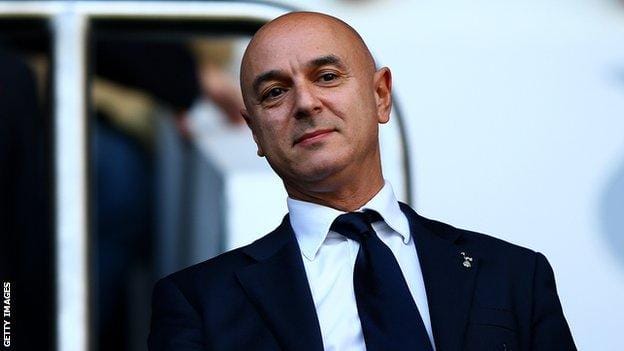
Despite the long list of players mentioned in the previous paragraphs, the past 25 years have been our least successful era since the period before Spurs won their first league title in 1951. There were many semi-finals, some finals, and plenty of top-four finishes, but until last season's Europa League victory the club had drawn a blank for 17 years.
The great Bill Nicholson once said:“If you don’t win anything, you have had a bad season.” Top-four finishes, in our chairman's eyes, became the marker for a successful or disappointing season. Aspiring for goodness, rather than greatness, was the objective. Cup competitions, where our successes predominantly came in the past, were deprioritised for the riches of the Champions League, and the players (and managers) were incentivised accordingly. This attitude undoubtedly led to the creation of the word 'Spursy', which Google AI describes as 'a team (especially Tottenham Hotspur) that shows great promise or is close to success but ultimately fails or underperforms in a frustrating, inconsistent, or comical way, essentially "bottling" victory or snatching defeat from the jaws of success'. It's hard to argue with that definition!
The stories of buying Paul Gascoigne's parents a house to thwart Sir Alex Ferguson's Manchester United, or signing World Cup-winner Jurgen Klinsmann on then chairman Sir Alan Sugar's yacht, had been replaced by polite thank you letters of rejection, or regrets of the ones that got away, like Petit, Hazard, Willian and Grealish, and the transfer debacles last summer with Morgan Gibbs-White and Eberechi Eze. 'To dare is too dear' has long been a slogan used by the hardcore support, who remembered the days when the club was more than just a stepping stone towards somewhere better, and when world-class players wouldn't eventually have to leave to fulfil their ambitions and be paid the going rate for their talent.
As we all know, it's a short career. If you're considered a world-class player you need a legacy to back that up, and you want to maximise your earning potential. Playing for Spurs offers neither of those possibilities. The 'game-changer' of a new stadium and the 'world-class training ground' have produced a dismal home record, and no real star to emerge from the academy since Harry Kane who, like Modric, Bale and other generational talents before him, left to win silverware. What remains is a soulless money-making machine where you can 'Skywalk' off the roof, watch a Beyoncé concert, an NFL match or a big fight. To quote another great former manager, Keith Burkinshaw: "There used to be a football club over there."
If you're considered a world-class player you need a legacy to back that up, and you want to maximise your earning potential. Playing for Spurs offers neither of those possibilities.
Son Heung-min, the last surviving Spurs player to achieve legend status, departed in the summer with the winners medal that many of his predecessors failed to grab. Now 33, and no longer at the peak of his powers, he would still walk into this Tottenham side, and would probably still be our best player, which is an incredibly depressing situation to be in. So where are the legends in waiting? And where are the players that can win a game for you with a moment of brilliance that's worth the (exorbitant) attendance fee all by itself? In a nutshell, they've all gone.
That's not to say that we don't have some good players at the club, a few promising youngsters, and some may well go on to achieve greatness. However, the likelihood is, with our current trajectory, that this will happen with another team. Despite this sad indictment of our once great club, our previous chairman deemed himself worthy of a bigger salary than our top players, and expected the long-suffering fans to pay the highest ticket prices in the country as he hired and fired manager after manager while rarely, if ever, signing the players at the top of their wishlists. You get what you pay for... unless you're a Spurs supporter.
Success doesn't always breed success
Last season's Europa League win, where the stars aligned and season ticket holders' entertainment was sacrificed for one nerve-jangling, but ultimately victorious, night in Bilbao against the worst Man Utd side in recent history, was never going to be a springboard for further success. Season three would not have been better than season two, apart from (probably) a slightly higher Premier League finish. How do I know? I don't for sure, but I think the logical way to make that kind of prediction is to imagine the situation had we lost that match. Would there still be grounds for optimism? I think we all know the answer to that question.
After his dismissal, Ange Postecoglou revealed that he knew he was going to be sacked, regardless of whether he fulfilled his second-season prophecy or not. It was hardly a surprise, even though it divided fan opinion. Any chairman that would sack a manager a week before a cup final and put Ryan Mason in temporary charge against the best manager in the world would not settle for a 17th-place league finish. There were other valid reasons for his dismissal, such as the ongoing injury situation. Injuries can be a lottery, but to get the same spate of injuries to predominantly the same players at exactly the same time, two seasons running, points to more than just random coincidence, and a stubborn refusal to learn from your mistakes. But leaving when he did, before things inevitably turned sour, having silenced all his doubters and ridiculers after confidently (or even arrogantly) saying that he always wins things in his second season, was the best outcome all round. He gave us a trophy, and for that we'll forever be grateful.
Enter Thomas Frank
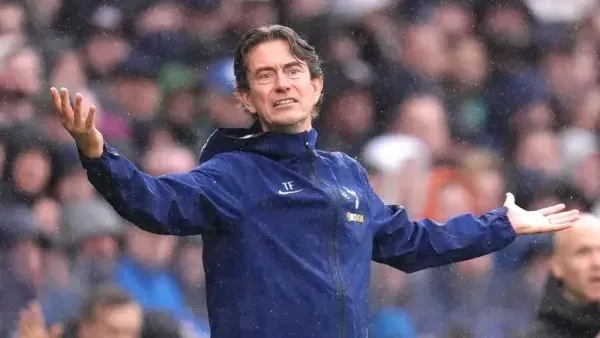
After the 'that's who we are mate' mentality of Ange Postecoglou, which started as a brave new world and finished up like an episode of Casualty, it was time for a tactician and, probably, another 'yes' man. Someone who overachieved with a limited budget, and got the best out of his players. That someone was Thomas Frank. A few signings were made, two loan deals were made permanent, and two more loans came in, including a long-awaited number six. Maddison's heartbreaking ACL injury in pre-season and Son's departure left a huge void in creativity and output, supplemented by Kulusevski's continuing absence with what was originally classified as 'a knock'. With a Champions League season on the horizon, Spurs were looking woefully short.
Big names were linked. Achievable big names, rather than players that would see us as a step down. Morgan Gibbs-White and Nico Paz decided to stay with their clubs. Eberechi Eze strung us along until Arsenal were ready to step in. Savinho preferred a place on the Manchester City bench to a starring role in N17. Eventually, after much embarrassment and fan anger towards our unpopular chairman, Xavi Simons was signed as our playmaker and an unfit Randal Kolo Muani as an additional striker just before the deadline.
False start
Initial results and performances were promising. We were five minutes away from unexpected Super Cup success against PSG, but the 'Spursy' tag struck again. Newly promoted Burnley were dispatched with little fuss, and then came a magnificent 2-0 win at Manchester City. We were solid, but sterile, relying mainly on set pieces and our superior fitness against teams that had played in the World Club Championships and had barely a couple of weeks of pre-season.
Bournemouth were the first high-intensity team we came up against, and we were totally outplayed. Our inability to break down a low block was a long-standing problem, compounded by having inferior players to the previous season, when we finished 17th. But without Son's ability to bend and time his runs, Maddison's ability to find those runs, Kulusevski's ball carrying and pinpoint delivery, and Solanke's ability to hold the ball up and bring others into play, we struggled to find any fluidity against every type of defence. It was a totally new forward line (bar Richarlison), with no proven goalscoring or goal-creating ability at PL level, and it showed, despite Mohammed Kudus impressing with his dribbling skills on the right wing.
Results, and especially performances, have continued to take a downward turn, with the odd exception. Entertainment has been sparse to say the least over the past few years, but the performances this season against Arsenal, Chelsea and Nottingham Forest rank among the worst I've ever seen, and the unbeaten away record that was papering over the cracks of our relegation form at home is now a distant memory as we continue to slide down the table. To quote our current manager: "I promise you one thing. One thing is 100% sure, we will lose football matches." Inspiring stuff, and it's clearly rubbed off on the players.
Regime change
On September 4th, out of the blue, Daniel Levy's 25-year grip on the club I love came to an abrupt end. Was it due to the much-publicised transfer failures last summer, or something more sinister? Honestly, I don't care, as it provided a glimmer of hope for a brighter future. The Lewis family were quoted as wanting a change in leadership to achieve more success on the pitch. As with Big Ange, it seemed ill timed to sack someone in order to be more successful just after they delivered the club's first trophy for 17 years. Karma is a funny thing.
Any good will that came from last May's Europa League victory is long gone. After that final, feelings were mainly those of relief rather than pure joy. It was the worst final in years, completely devoid of quality, and the goal was our only shot on target the entire match, if Brennan Johnson even touched it at all. It was a hideous season, with one huge outpour of pent-up emotion at the end.
The club appears to have lost all identity. There has never been such a disconnect between the players, the manager and the supporters. At home games you can see the empty seats, and season ticket holders (like myself) are unable to sell their match tickets on the club's exchange. People are feeling the pinch, especially at this time of year, and Son's departure has brought an end to the plethora of Korean fans who regularly topped up the club's gate receipts. But the biggest issue is that an inferior product is on show at an inflated price. Four home wins out of 18 in 2025 is worse than unacceptable, and fans no longer look forward to the games as they are more of an ordeal than an escape. Weekends are no longer ruined by defeat, as defeat is expected, and even the rare wins are lacking in any real entertainment.
A general feeling of indifference is not a healthy situation for any new board to inherit, but any hierarchy, like a new manager, would usually be given the time and grace to turn things around. However, contrary to most regime changes, the ownership remains the same. With previous chairman Daniel Levy constantly subjected to protests demanding his resignation, faith in ENIC is at an all-time low, and the natives are restless. A lower mid-table finish, or even worse, is looking likely, and we've made our poorest start to a PL season in 17 years which, ironically, was the season after our last trophy win.
Window of opportunity
While a quick fix is hardly ever the best solution to any problem as it only treats the symptom and not the root cause, in this situation a quick fix is the only option available and, to get the fans on side, it needs to be one that shows Daniel Levy to be the root cause. In order to do that, a lot of money has to be spent in January, and the wage ceiling needs to be shattered.
This bloke is meant to be intelligent, yet constantly has a pop at sections of the fanbase. It's the most loyal fans you can hear booing and are fed up with you boring them to death.
— Has he gone yet? FrankOut #coys (@Mr_W_V_B) December 21, 2025
Frank is useless and needs to go. pic.twitter.com/kEK0kgdbnr
Sacking the manager is usually a way of pacifying the fans when the team is playing badly, and a large section of the fanbase are already calling for Thomas Frank's head on social media, if not (yet) within the stadium itself. Questioning fan loyalty and constantly referring to last season's 17th-place finish as an excuse for poor performances is not what the fans want to hear, regardless of whether the comments are justified or not. After the capitulation at Forest, things could have turned ugly against Liverpool had a similar performance followed, but the sendings off and the injustice of Liverpool's second goal brought about a reaction from both players and supporters, and the nine men almost salvaged a draw. Honour in defeat is scant consolation, and the impending suspensions are a double whammy, but the desire shown by the remaining players in the last 20 minutes, along with the many contentious issues that are still being debated, provided the manager with some welcome distractions, for now.
While a quick fix is hardly ever the best solution to any problem as it only treats the symptom and not the root cause, in this situation a quick fix is the only option available and, to get the fans on side, it needs to be one that shows Daniel Levy to be the root cause.
Had the previous chairman still been in charge, sacking the manager to mask his own inefficiencies would have been the likely course of action. In light of that, backing, rather than sacking Thomas Frank would be the antithesis of the past 25 years under Daniel Levy, even if they are backing somebody else's choice. If they give the man a chance to succeed and sign some players to excite the crowd they will appease the fans, and if it doesn't work out there will be plenty of alternatives available in the summer who would welcome the opportunity to work with a board that will properly back their manager.
With Matt Wells departing for the US, and murmurings of Fabio Paratici returning to Italy just two months after rejoining Spurs following a 30-month ban from football, there is just as much disharmony off the pitch as on it. Strong, decisive leadership is urgently required. Quality signings need to be made early in the window without fuss and unnecessary haggling, while perennial underperformers need to be shipped out instead of having their contracts extended to retain their value. The club is at a crossroads, and should January's transfer window end up full of embarrassing rejections and last-minute panic signings, the 'game-changer' of a stadium will become an extremely toxic place in early 2026, and the new board will be sitting uncomfortably in their seats while the previous chairman allows himself a wry smile, and lights a cigar with a £50 note.